by Fabi@Pragier | May 2, 2025 | Essentials
What Is Xanthan Gum?
If you’ve started baking gluten-free, chances are you’ve come across the ingredient xanthan gum. But what exactly is it?
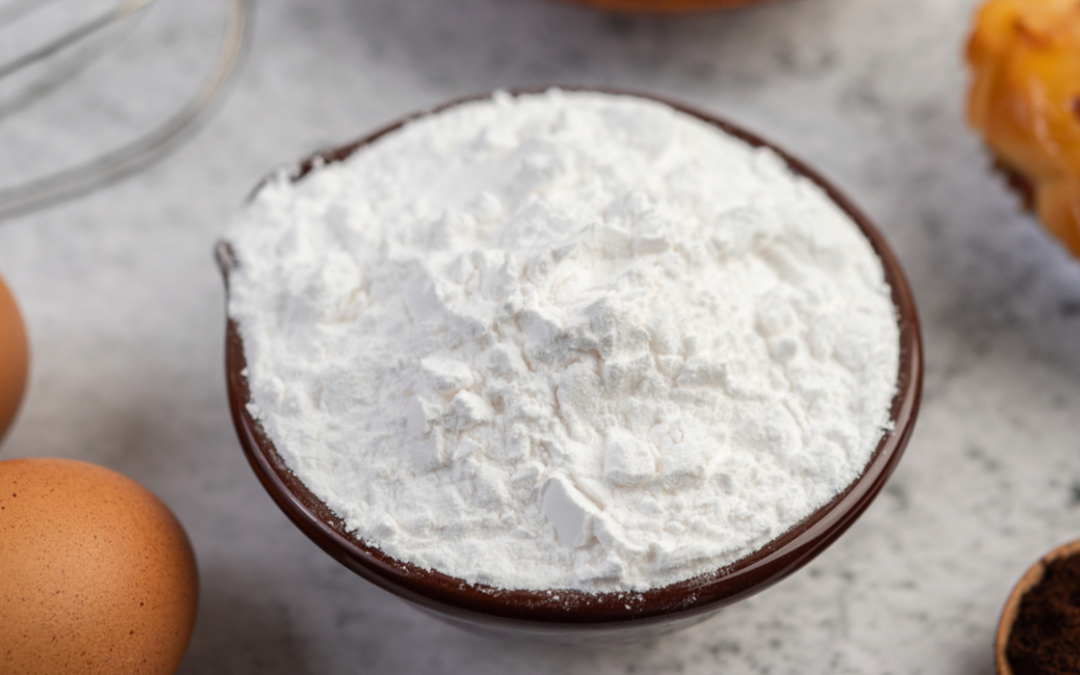
Xanthan gum is a natural food additive commonly used to thicken, bind, and stabilize recipes — especially in gluten-free and dairy-free cooking. It helps give baked goods the texture and structure that gluten would normally provide.
How Is Xanthan Gum Made?
Xanthan gum is produced by fermenting simple sugars (usually from corn, soy, or wheat) with a specific type of bacteria called Xanthomonas campestris. After fermentation, the mixture is dried into a fine white powder — that’s the xanthan gum we use in recipes.
Even though it comes from a scientific process, it’s considered safe and widely used in both home kitchens and commercial foods.
Why Is Xanthan Gum Used in Gluten-Free Baking?
When you remove gluten from a recipe, you also lose the protein that gives dough its stretchiness, structure, and bounce. Xanthan gum fills that role.
What xanthan gum does:
- Helps bind ingredients together
- Prevents baked goods from being crumbly or dry
- Adds elasticity to doughs and batters
- Improves texture in breads, cakes, muffins, and cookies
Without it, many gluten-free recipes would fall apart — literally!
Is Xanthan Gum Safe and Allergy-Friendly?
- Xanthan gum is naturally gluten-free
- It’s vegan and dairy-free
- Most people tolerate it well, even in small daily amounts
However:
If you have severe allergies to corn, soy, or wheat, check the source of the xanthan gum, as trace allergens might be present. Some brands are certified allergen-free — always read the label carefully.
A few people may experience mild digestive discomfort if they consume large quantities.
How Much Xanthan Gum Should You Use?
In gluten-free baking, a little goes a long way.
General guidelines:
- Cookies: 1/4 teaspoon per cup of flour
- Cakes and muffins: 1/2 teaspoon per cup of flour
- Breads and pizza dough: 1 teaspoon per cup of flour
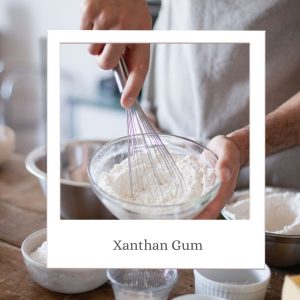
Always mix it with the dry ingredients to avoid clumping.
Best Substitutes for Xanthan Gum
If you’re avoiding xanthan gum, you can still bake successfully! Here are some natural, allergy-friendly alternatives:
- Psyllium Husk
- Excellent for gluten-free breads
- Adds structure and flexibility
- Use 1 tablespoon for every teaspoon of xanthan gum
- Chia Seeds or Ground Flaxseeds
- When soaked in water, they form a gel that helps bind ingredients
- Great for cookies and muffins
- Use 1 tablespoon seeds + 3 tablespoons water = 1 egg or 1 tsp xanthan gum
- Guar Gum
- Similar texture and function
- Made from guar beans
- Use in the same amount as xanthan gum
- Agar-Agar or Gelatin (for specific recipes)
- Good for thickening or gelling, especially in dairy-free desserts
Chef’s tip :
Xanthan gum may sound like a complicated ingredient, but it’s an essential tool in the world of gluten-free and dairy-free baking. Whether you choose to use it or prefer natural substitutes, understanding how it works will help you create recipes with better texture, moisture, and structure — all without gluten or dairy.
by Fabi@Pragier | May 2, 2025 | Essentials
What Is Cassava Starch?
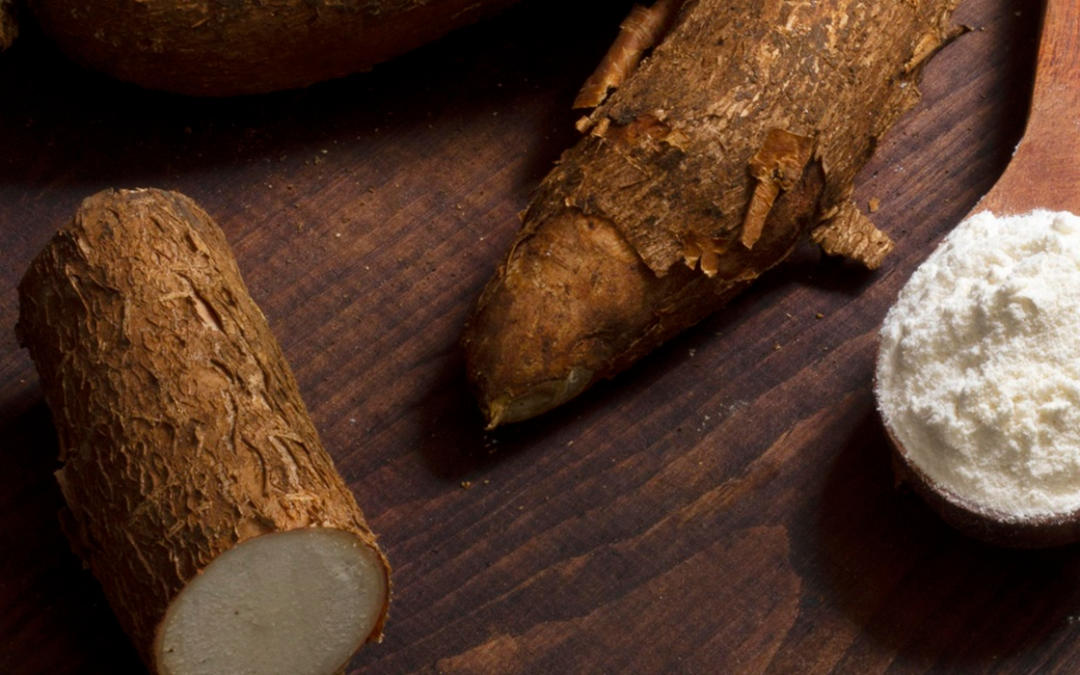
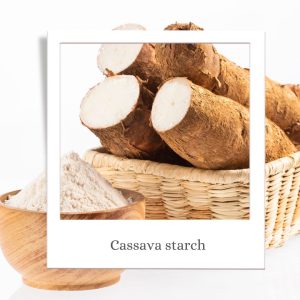
Cassava starch, also known as tapioca starch, is a fine, white powder extracted from the cassava root — a starchy tuber native to South America. It’s widely used in gluten-free, grain-free, and paleo cooking because of its neutral flavor and ability to thicken, bind, and add elasticity to doughs and batters.
Key Benefits of Cassava Starch:
- Naturally gluten-free
- Grain-free and nut-free
- Neutral taste and smell
- Great for baking, thickening sauces, and improving texture
It’s important to note: cassava starch and cassava flour are not the same.
Cassava starch is just the extracted starch from the root, while cassava flour is made from the whole root, peeled, dried, and ground.
Why Replace Cassava Starch?
People may want to replace cassava starch due to:
- Allergies or sensitivities
- Limited availability
- Following specific dietary protocols (like low FODMAP or keto)
- Wanting a more nutrient-dense option
Here are some top cassava starch alternatives and when to use them:
- Arrowroot Starch
- Light and neutral in flavor
- Works well in baking and thickening
- 1:1 substitution ratio
- Tapioca Starch (if not already being used)
- If you meant cassava flour and not the starch, then tapioca starch can be used as a substitute
- Adds chewiness to baked goods
- Potato Starch
- Good for baking and frying
- Slightly heavier texture
- Use 3/4 the amount of cassava starch
- Cornstarch
- Common and affordable
- Best as a thickener, not ideal for paleo diets
- Use slightly less: 2/3 to 3/4 the amount
- Sweet Rice Flour (Glutinous Rice Flour)
- Great for chewy textures
- (like mochi-style goods)
- Not grain-free, but gluten-free
- Use 1:1 in many recipes
How to Choose the Right Substitute
The best substitute depends on your dietary restrictions, the texture you want, and the type of recipe you’re making.
- For baking: arrowroot or potato starch
- For thickening sauces: cornstarch or arrowroot
- For chewy or stretchy texture: sweet rice flour or tapioca starch
Chef’s tip :
Cassava starch is a versatile, naturally gluten-free ingredient — but if it’s not an option, there are plenty of smart swaps depending on your needs. Whether you’re baking, frying, or thickening sauces, these alternatives will keep your dishes just as delicious.
by Fabi@Pragier | May 2, 2025 | Essentials
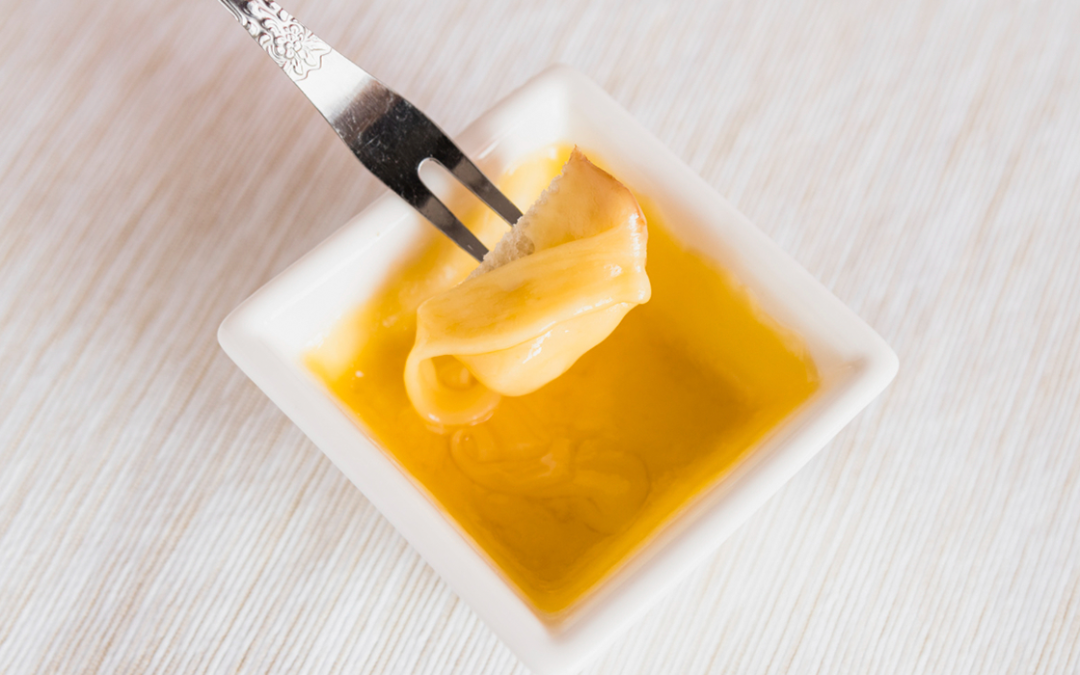
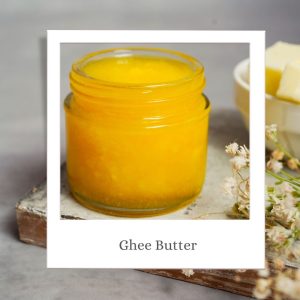
Is ghee butter dairy free ? or only Lactose free ?
Ghee is not completely dairy-free, but it is typically lactose-free and casein-free or contains only trace amounts.
- Lactose-free: Yes — the milk solids, which contain lactose, are removed during the clarification process.
- Casein-free: Mostly — but there might be trace amounts of casein or whey, which can still affect people with dairy allergies.
- Dairy-free: Not technically — because it’s made from butter (which comes from milk), it’s still considered a dairy product, even if it’s had almost all the problematic parts removed.
So, if you’re lactose intolerant, ghee is usually safe.
But if you have a true dairy allergy or follow a strict dairy-free diet (for example, for autoimmune or ethical reasons), it’s better to avoid it or choose a certified dairy-free ghee alternative made from plants (like coconut oil-based ones).
Coconut oil or coconut butter can be a good replacement for Ghee butter .
Briefly …
Ghee is not 100% dairy-free, but it is lactose- and casein-free enough for most people with dairy intolerances.
Here’s the distinction:
-
Ghee is made from butter, which is dairy.
-
During the clarification process, milk solids (lactose and casein) are removed.
-
The final product is almost entirely pure butterfat.
So is it dairy-free?
-
Not technically — it comes from a dairy source.
-
Functionally, for many people with lactose intolerance or even mild dairy sensitivities, ghee is well tolerated.
-
But for those with a severe dairy allergy (especially to casein), ghee is not considered safe.
by Fabi@Pragier | Jun 24, 2024 | Essentials, Recipes
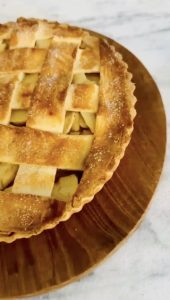
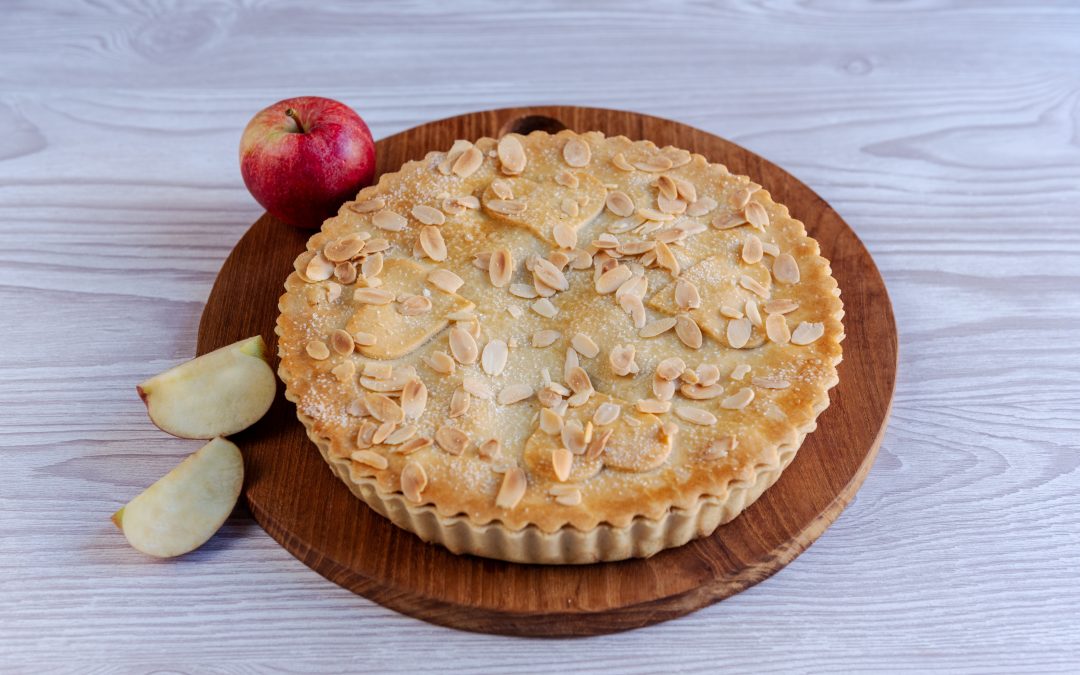
Revista Visão: Receita do livro “Uma vida doce, sem glúten e sem laticínios”, de Fabiana Pragier, editado pela Casa das Letras.
Massa
100 g de ovos inteiros
60 g de açúcar demerara
65 g de manteiga vegana gelada
60 g de farinha de amêndoa
270 g de mix de farinhas sem glúten
Recheio
5 maçãs grandes
Canela em pó, a gosto
Noz-moscada, a gosto
5 g de massa de baunilha
20 g de suco de limão
180 g de açúcar demerara
50 g de uvas passas
50 g de nozes
Preparação
Massa
Bata os ovos com o açúcar até este estar dissolvido.
Usando o acessório para amassar a batedeira, misture a manteiga vegana, a farinha de amêndoa e a mistura de farinhas sem glúten até formar um crumble .
Junte os ovos até ficar uma mistura homogênea (pode finalizar com as mãos).
Faça uma bola e embrulhe em filme aderente, leve ao frigorífico por 30 minutos.
Divida a massa em duas partes, uma com ⅓ da quantidade e outra maior com a massa restante. Estenda a parte maior com o rolo (4 mm de espessura) e forre o fundo de uma forma de tarte, perfurando com o garfo para não estufar.
Adicione o recheio e o nível com uma colher.
Estenda a massa restante com a mesma espessura e cubra a tarte. Faça igualmente alguns furos com o garfo para que o vapor possa sair.
A tarte deve cozer cerca de 30 minutos no forno a 170 ºC.
Pode decorar com amêndoas em lascas antes de levar a tarte ao forno.
Recheio
Descasque e pique as maçãs, coloque-as numa taça com o suco de limão.
Misture com os ingredientes restantes e recheie a torta. Adicione também o caldo formado pelas maçãs.