
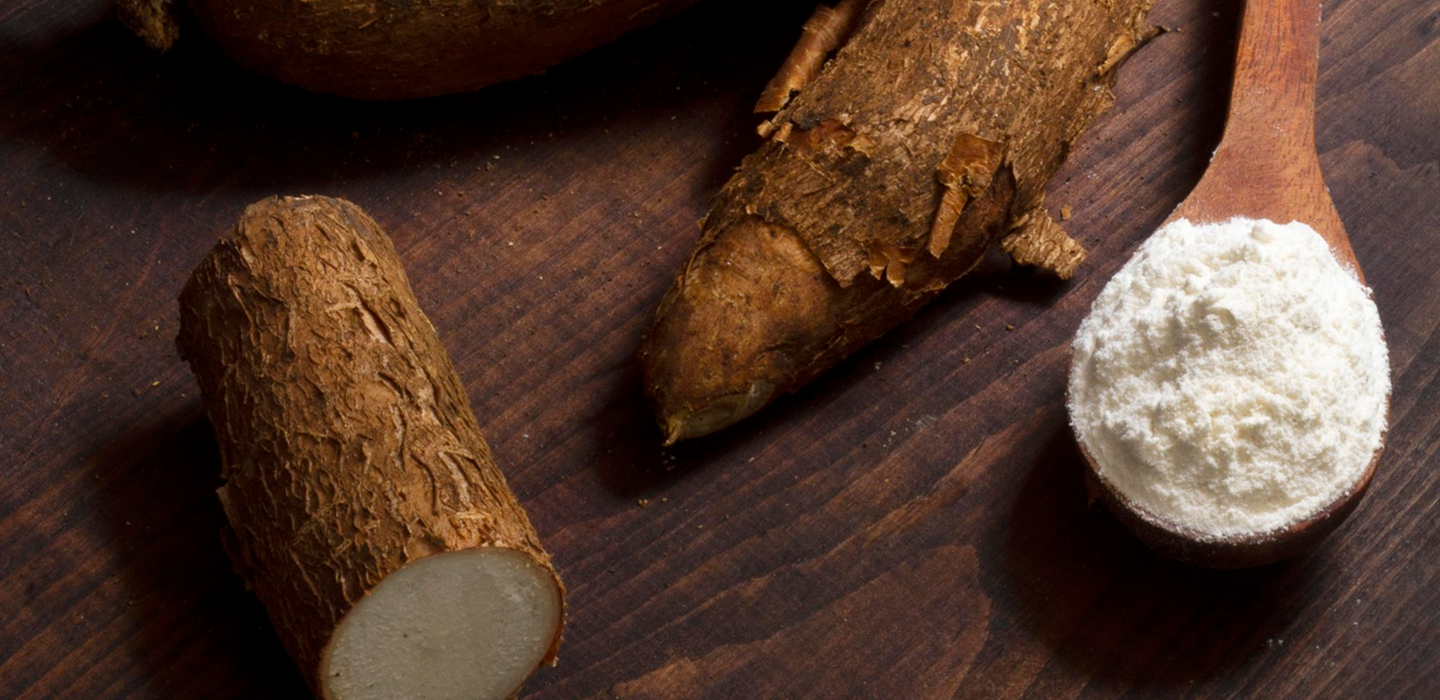
What Is Cassava Starch?
Cassava starch, also known as tapioca starch, is a fine, white powder extracted from the cassava root — a starchy tuber native to South America. It’s widely used in gluten-free, grain-free, and paleo cooking because of its neutral flavor and ability to thicken, bind, and add elasticity to doughs and batters.
Key Benefits of Cassava Starch:
- Naturally gluten-free
- Grain-free and nut-free
- Neutral taste and smell
- Great for baking, thickening sauces, and improving texture
It’s important to note: cassava starch and cassava flour are not the same.
Cassava starch is just the extracted starch from the root, while cassava flour is made from the whole root, peeled, dried, and ground.
Why Replace Cassava Starch?
People may want to replace cassava starch due to:
- Allergies or sensitivities
- Limited availability
- Following specific dietary protocols (like low FODMAP or keto)
- Wanting a more nutrient-dense option
Here are some top cassava starch alternatives and when to use them:
- Arrowroot Starch
- Light and neutral in flavor
- Works well in baking and thickening
- 1:1 substitution ratio
- Tapioca Starch (if not already being used)
- If you meant cassava flour and not the starch, then tapioca starch can be used as a substitute
- Adds chewiness to baked goods
- Potato Starch
- Good for baking and frying
- Slightly heavier texture
- Use 3/4 the amount of cassava starch
- Cornstarch
- Common and affordable
- Best as a thickener, not ideal for paleo diets
- Use slightly less: 2/3 to 3/4 the amount
- Sweet Rice Flour (Glutinous Rice Flour)
- Great for chewy textures
- (like mochi-style goods)
- Not grain-free, but gluten-free
- Use 1:1 in many recipes
How to Choose the Right Substitute
The best substitute depends on your dietary restrictions, the texture you want, and the type of recipe you’re making.
- For baking: arrowroot or potato starch
- For thickening sauces: cornstarch or arrowroot
- For chewy or stretchy texture: sweet rice flour or tapioca starch
Chef’s tip :
Cassava starch is a versatile, naturally gluten-free ingredient — but if it’s not an option, there are plenty of smart swaps depending on your needs. Whether you’re baking, frying, or thickening sauces, these alternatives will keep your dishes just as delicious.